
Bob Dylan’s Witnesses | A Complete Unknown
When making a film about Bob Dylan, it seems like a logical choice to focus on his early years. The period between 1961, when Dylan arrives in New York and quickly connects with the folk scene in clubs like Wha? or Gaslight, and 1966, when he releases Blonde on Blonde, is the most iconic and best-documented phase of his life – covered in dozens of books, bootlegs, and films. Clinton Heylin’s standard biography dedicates its entire first volume to it; the second covers the next 55 years. Similarly, Dylan’s autobiography Chronicles (of which only the first volume has been published so far) devotes most of its pages to the first half of the ’60s. This is when Dylan becomes famous – the “voice of a generation.” Even now, 60 years later, many people attending his concerts do so to hear Blowin’ in the Wind and The Times They Are a-Changin’; the fact that Dylan no longer performs them live, or that when he does, he delivers them in unrecognizable versions, it’s another story. In a 2006 interview with Jonathan Lethem, Dylan said, “I own the Sixties – who’s going to argue with me?” He was joking, but really, who could disagree?
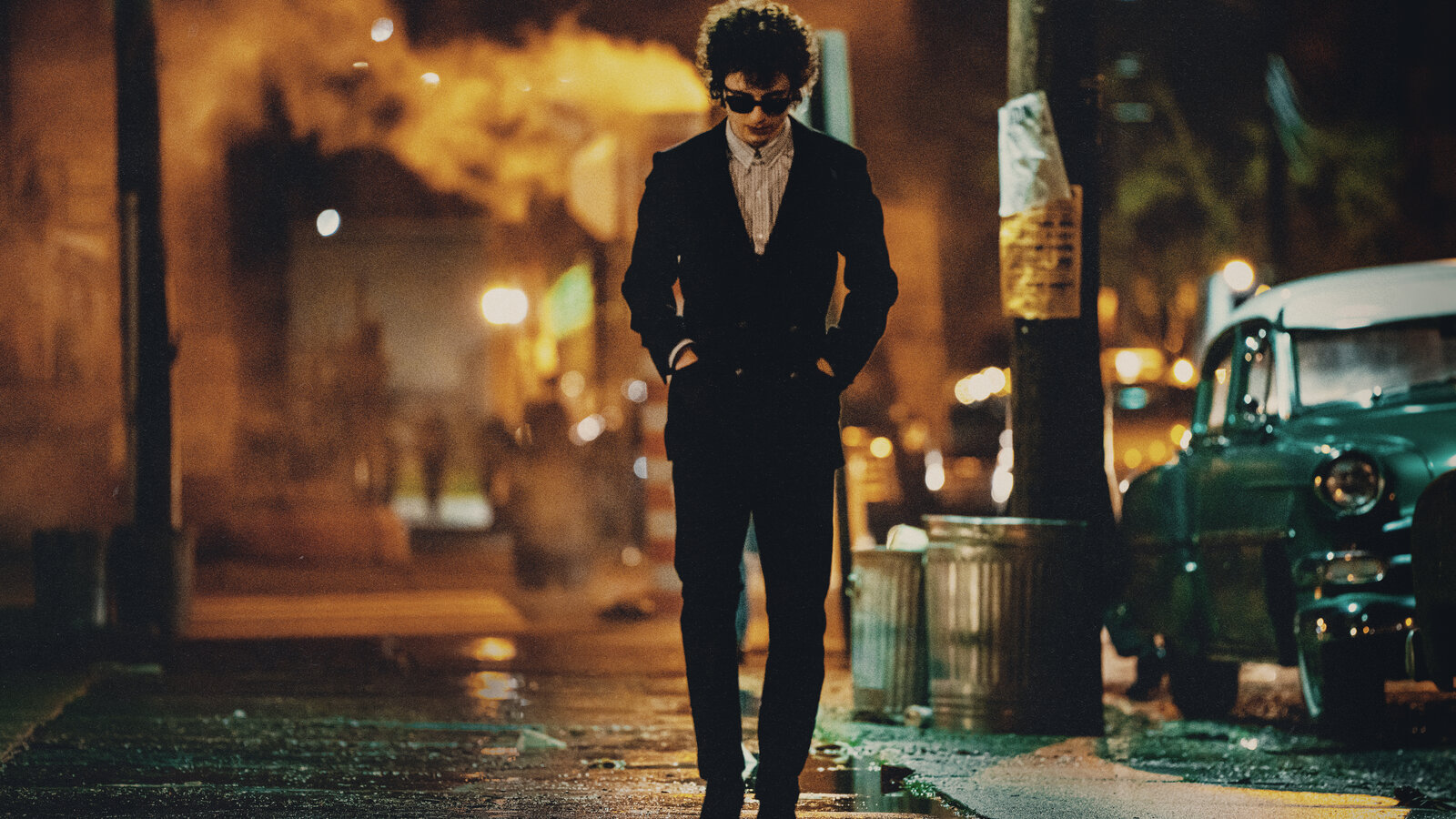
After 1966, when a minor motorcycle accident gives Dylan the perfect excuse to withdraw from the stage for eight years – only to return seemingly to dismantle his image as a ’60s icon – his biography becomes more opaque. Sure, there are still biographers documenting his life; sure, there are thousands of hours of concert footage and studio recordings; sure, there are numerous documentaries; sure, there are countless interviews with his collaborators and an endless list of memoirs published by musicians who played with him, former friends, and past lovers; sure, the internet is full of articles, websites, podcasts, and pages dedicated to Dylan. But who can say they know him? The enigma has only deepened over the years. There is a special breed of obsessive fans who search for hidden messages in his songs – the “Dylanologists.” David Kinney even wrote a book about them. Of course, Charles Manson also claimed to have deciphered secret messages in The Beatles’ White Album. And today’s Taylor Swift fans hunt for Easter eggs in her songs. But Dylan’s mythology has sustained this cult for over sixty years. Sixty years! One person, living near one of Dylan’s houses, spent a decade (from 2009 to 2019) analyzing the hidden messages in the design of the Christmas lights outside Dylan’s home. He found all sorts of things – references to U.S. unemployment rates, or even to the Mayan calendar’s prediction of the world ending in 2012. Another Dylanologist became famous in the 1970s for rummaging through the trash outside Dylan’s New York home; the fact that he found nothing but dirty diapers didn’t discourage him. He remains well-known enough that just a few weeks ago, The New York Times published a full article about him to coincide with the release of James Mangold’s film, A Complete Unknown.
This is not the first biopic Mangold has made about a musician. Quite the opposite – his 2005 film about Johnny Cash, Walk the Line, refined the standard biopic formula. In the words of David Ehrlich, “If writer-director James Mangold didn’t invent the standard-issue music biopic, I would argue that he committed the far more reprehensible crime of perfecting it – of so perfectly crystallizing the sub-genre in the public imagination that it had to be destroyed from several different angles at once.” Ehrlich cites Todd Haynes’ I’m Not There as one such attempt. The film features six different actors – including Cate Blanchett – playing Dylan. But judging by the success of a monstrosity like Bryan Singer’s Bohemian Rhapsody (2018), these experiments haven’t led anywhere. And now, after the Indiana Jones 5 flop, Mangold has returned to the scene of the crime.
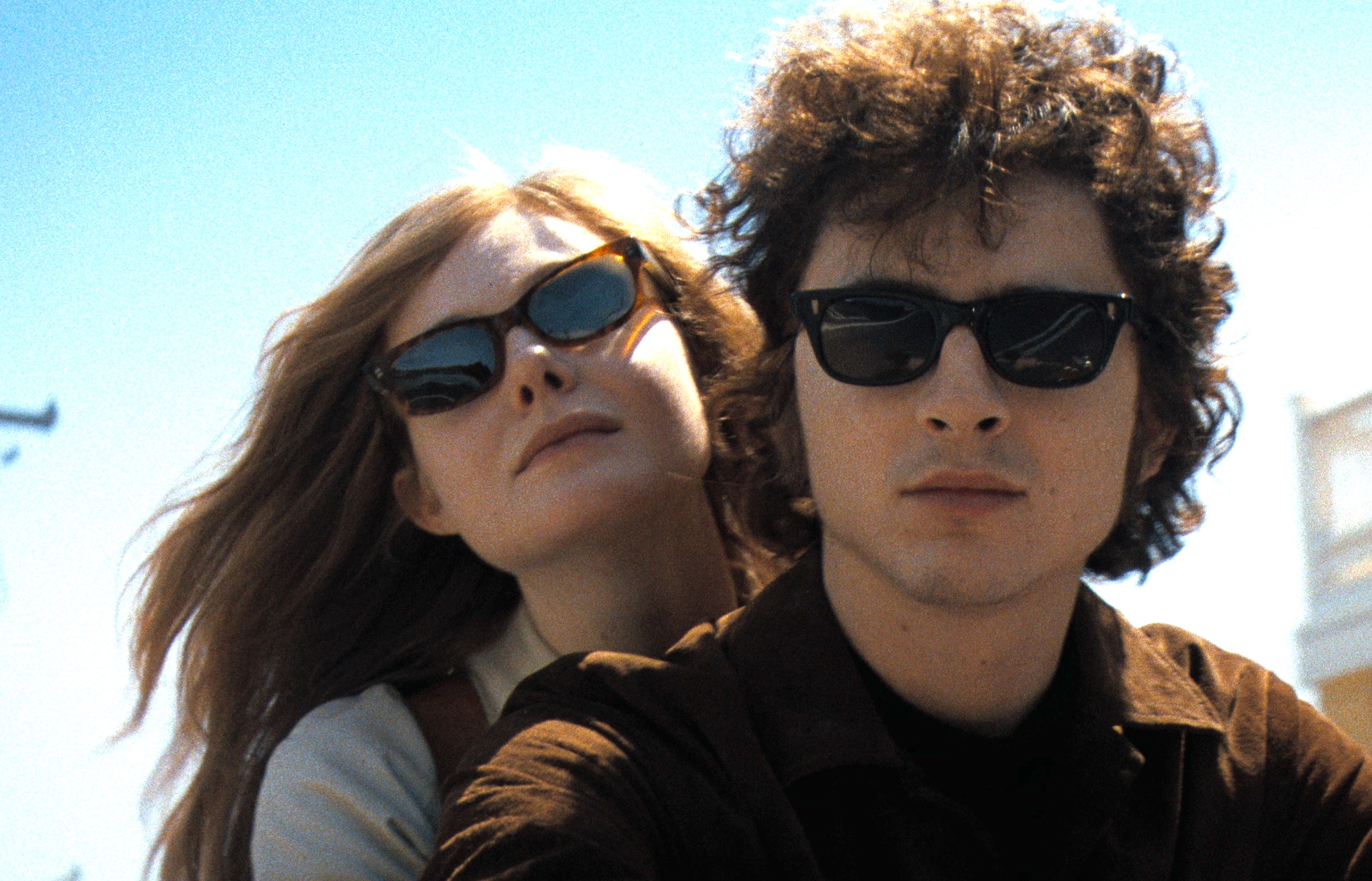
Mangold’s film begins in 1961, when Dylan hitchhikes to New York to meet his idol, Woody Guthrie, who is hospitalized in a New Jersey psychiatric ward, and ends with Dylan’s legendary 1965 performance at the Newport Folk Festival, where he steps onto the stage with a band armed with electric instruments, only to be booed by purist folk fans. I didn’t use the word “armed” lightly: in Todd Haynes’ film, Dylan and his band pull out automatic weapons from their instrument cases and open fire on the audience. That was the level of shock – it felt like an act of aggression. Though the reasons why Dylan was booed continue to be debated to this day (see the recent New York Times interview with Elijah Wald, author of the book that inspired Mangold’s film, Dylan Goes Electric!), the event has become part of music mythology.
The film’s narrative arc stretches between two moments depicting the emergence of a hero seemingly out of nowhere, ready to change history, and his moment of paroxysmal apotheosis, where he dies and is reborn at a higher level. Between these two moments, A Complete Unknown diligently crams in a few hit songs, a few formative encounters, a few love affairs, and a few social interactions that make it abundantly clear that Dylan is a genius understood all too well by everyone (even though he seems increasingly dissatisfied with this role).
Thus, the film’s narrative arc stretches between two moments depicting the emergence of a hero seemingly out of nowhere, ready to change history, and his moment of paroxysmal apotheosis, where he dies and is reborn at a higher level (though, according to Mangold’s film, only the folk scene dies; in truth, it was already dead – David Dalton, in Who is That Man?, notes that folk’s rigid form had been a subject of parody for years). Between these two moments, A Complete Unknown diligently crams in a few hit songs (exactly as many as can fit on a CD), a few formative encounters (with Woody, Pete Seeger, and Johnny Cash – the latter given a disproportionately large role for obvious reasons), a few love affairs (with Suze Rotolo – portrayed, apparently at Dylan’s request, as Sylvie Russo in the film – and Joan Baez), and a few social interactions that make it abundantly clear that Dylan is a genius understood all too well by everyone (even though he seems increasingly dissatisfied with this role). Is there any real dramatic tension between these episodes? Not really. The film has a strictly linear structure – the equivalent of “one damn hit after another.”
Almost everyone in the film seems to exist solely to express their admiration for Dylan’s genius. The camera’s attention is monopolized by capturing various expressions of validation that all the characters display around him: excitement, delight, surprise, want, infatuation, elation.
Almost everyone in the film seems to exist solely to express their admiration for Dylan’s genius. The camera’s attention is monopolized by capturing various expressions of validation that all the characters display around him: excitement, delight, surprise, want, infatuation, elation. As Matthew Ingate put it, the only thing missing are iPhones connecting all these expressions (“Everybody in this movie, except for maybe Pete and Toshi Seeger, looks like they have seen and used an iPhone, from Bob Dylan to the adoring audiences who look at him, starry eye’d and laughing, as his career or his cars speed away from them”).
In any case, everyone seems to immediately sense (and show, each according to their acting ability) that they are part of history, as if they were interpreting inherently fluid and chaotic events from the comfortable vantage point of posterity, when everything has been transformed into History and Mythology. Almost all the historical coordinates of the characters are reshaped to fit this mythology. The biggest casualties of this process are the women in the film. Suze Rotolo, who in reality played a crucial role in Dylan’s artistic and political education, is downsized to an almost domestic presence. Joan Baez, to whom Dylan owes a significant part of his fame (she was the one who introduced him to a mass audience; she was the first to turn his songs into hits), is reduced to a vaguely annoying presence. Toshi Seeger hardly speaks throughout the entire film. Sara Lownds, Dylan’s future wife, doesn’t appear at all. Dylan himself, although Timothée Chalamet manages a convincing impression, lacks much depth as a character – he delivers only a fractured, superficial, and ultimately unlikable identity. The only character with real human dimensions is Pete Seeger, who has the good fortune of being played by Edward Norton; Norton builds his character as a fundamentally good guy, but one doomed to ridicule by his inability to see that “the times are a-changin’.”
The story does not progress in a dramatically engaging way, the characters are caricatures, and the historical context is practically nonexistent. Mangold’s film neutralizes the entire social, political, and ideological backdrop of the era, reducing it to opaque footnotes (if you’re not already a Dylan expert, all the cameo appearances remain unintelligible) and background information delivered in a hurry and detached from any remotely panoramic interpretive system.
The story, therefore, does not progress in a dramatically engaging way, the characters are caricatures, and the historical context is practically nonexistent. Mangold’s film neutralizes the entire social, political, and ideological backdrop of the era, reducing it to opaque footnotes (if you’re not already a Dylan expert, all the cameo appearances remain unintelligible) and background information delivered in a hurry and detached from any remotely panoramic interpretive system. The civil rights and liberties movements of the ’60s, the Cold War, the fundamental contradiction at the heart of the American folk music revival phenomenon (between its reactionary, nostalgic form and its progressive political message) – all of these are reduced to a vague background hum that apolitically accompanies Dylan’s journey toward plugging in. A typical scene: Joan Baez listens to apocalyptic news about the Cuban Missile Crisis, panicked, she leaves the house and wanders through empty streets that seem to be awaiting atomic rain, and at that very moment, through a sublime coincidence, she enters a club where Dylan is performing Masters of War – the anti-war anthem of the ’60s – for the first time, captivating the audience. Baez has no choice but to be captivated herself.
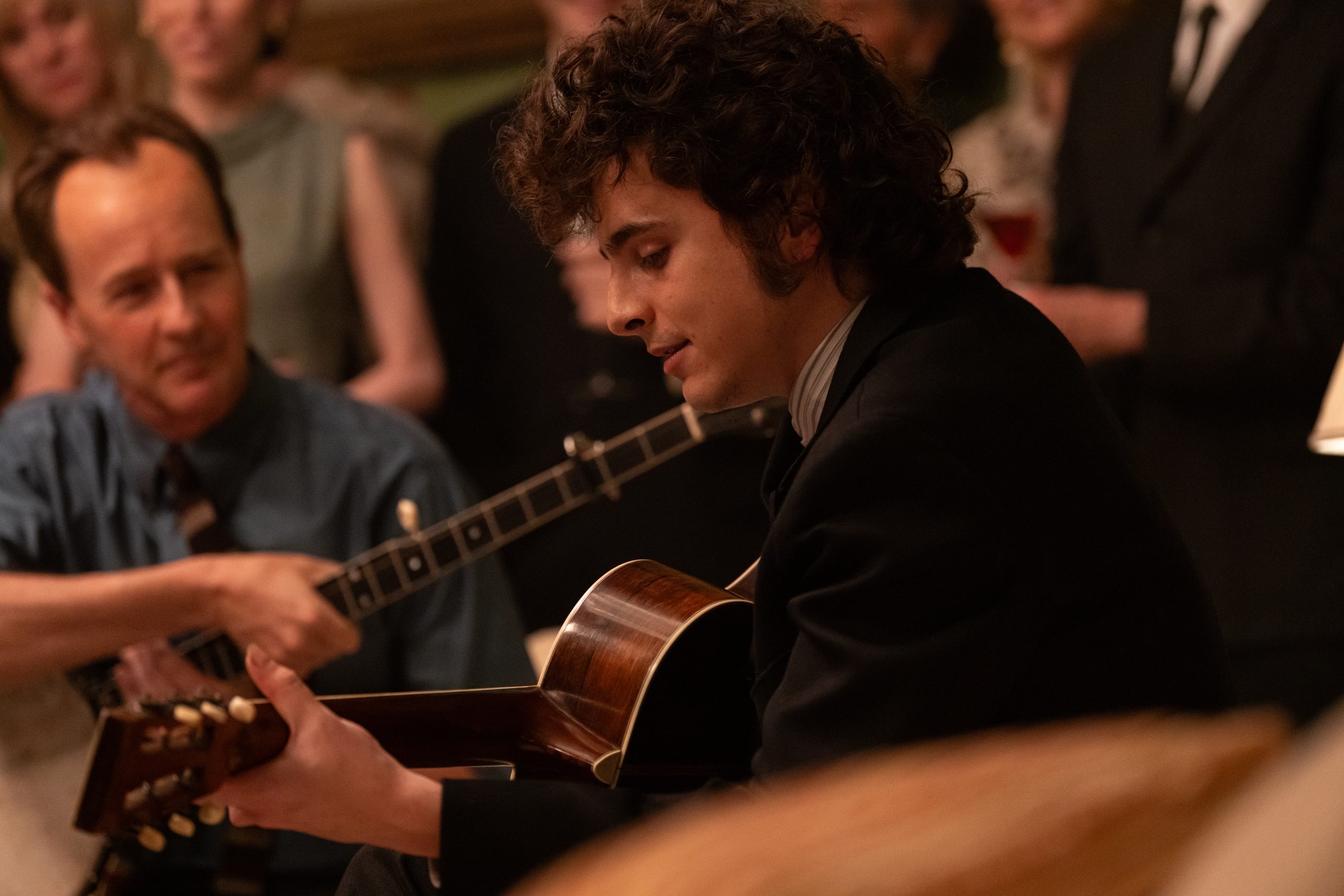
I mentioned at the beginning that the period covered by Mangold’s film is the most well-known from Dylan’s biography. That comes with advantages but also risks – both stemming from the vast amount of available information. Long lists could be (and have been) compiled detailing Mangold’s liberties with documented reality. For instance, Johnny Cash met Dylan at the 1964 Newport Festival, not in 1965, when Cash wasn’t even there. Likewise, no one shouted “Judas” at Dylan in Newport in 1965 – that happened a year later, in Manchester. And it was there, at that moment, that Dylan turned to his band and said, “Play it fucking loud” (in Mangold’s film, the line appears in the tamer version, “Play loud”). But these are just details. The real issue with Mangold isn’t that he takes so many liberties with the facts (even in documentaries like The Other Side of the Mirror, the 1965 booing is edited in a misleading way to suggest Dylan was met with hostility from the start, which isn’t true), but that these liberties lead nowhere.
The best way to get to know the real Dylan is to watch actual footage of him – documentaries like The Other Side of the Mirror, Don’t Look Back or No Direction Home are not only more authentic (obviously) and more generous in presenting Dylan’s complexity, but they also feel more contemporary.
As Matthew Ingate wrote in his review of Mangold’s film, the best way to get to know the real Dylan is to watch actual footage of him – documentaries like The Other Side of the Mirror, Don’t Look Back, or No Direction Home, which are not only more authentic (obviously) and more generous in presenting Dylan’s complexity, but they also feel more contemporary. I rewatched Eat the Document, the film Dylan himself edited from footage shot in 1966 by D.A. Pennebaker (who had previously made Don’t Look Back, about Dylan’s 1965 UK tour): it’s so experimental that it panicked the executives at ABC, the network that had commissioned it, who, after seeing the final cut, wanted to destroy it. Its experimentalism was in tune with what Dylan was doing in music at the time or in his “novel” Tarantula (written between 1964 and 1965). Compared to that, Mangold’s formal conventionality feels just as naive as the folk purists at Newport in 1965.

Mihai Iovănel
Mihai Iovănel (n. 1979), critic și istoric literar. Este cercetător la Institutul de Istorie și Teorie Literară „G. Călinescu” din București. Cel mai recent volum: Istoria literaturii române contemporane: 1990-2020 (Editura Polirom, 2021).